
How intelligence operates quietly inside systems and environments points to a design approach where visibility no longer serves as proof of capability.
Restraint as Capability
Contemporary systems equate capability with activity. The more a system responds, prompts, and optimises in view, the more intelligent it appears. This has become an unexamined baseline across the industry. Yet the most effective systems we have worked with do something harder: they make judgement calls about what to withhold. Restraint takes capability and applies it to the question of when to stay quiet, and that question turns out to be where most of the design craft actually lives.



113 Spring: Intelligence Without Announcement
At 113 Spring, the environment avoids traditional interface noise while still acknowledging presence. On arrival, visitors are met by the Digital Mirrors, surfaces that sense motion, distance, and energy to create responsive visuals that reflect each moment back to the individual and the collective. After that first acknowledgement, the space allows people to settle. As they do, the Community Veil, a dynamic layer of light and generative art controlled through SpringOS, begins to shift in response to spatial patterns, weather, time of day and collective energy, moving quietly across the backdrop of the environment.
Together, these layers adjust lighting, sound, and atmosphere in ways that align with human rhythms, guided by live spatial data and behavioural insights. The intelligence operates across physical and digital surfaces, adapting conditions to support comfort and connection without pulling focus toward itself.
Internal Complexity, External Clarity
Effective systems handle complexity before it reaches anyone. Decisions about relevance, confidence, and timing happen inside layers that most people never see. The outcome feels simple, though the work behind it rarely is.
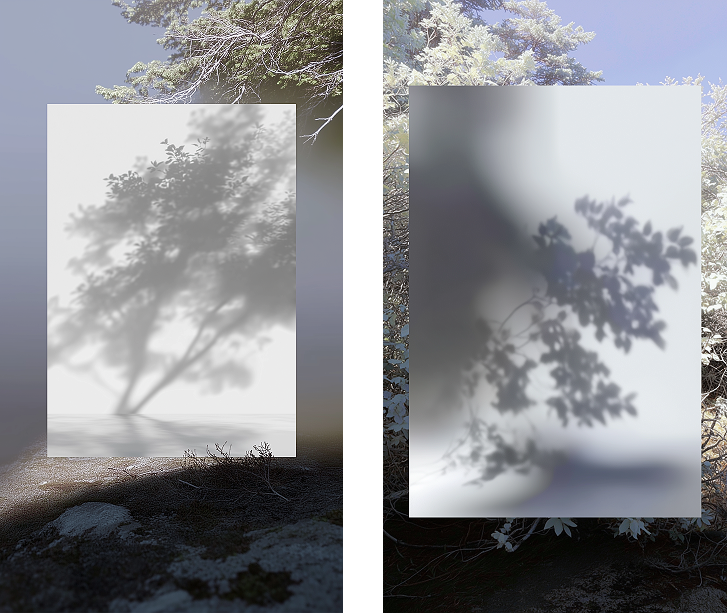
In Chinese painting, Liubai refers to the deliberate act of leaving parts of a composition unpainted, allowing meaning to form through what remains open. The space carries tension, guides attention, and activates the viewer without instruction. A related idea appears in the Japanese concept of Ma, where the interval between elements holds as much weight as the elements themselves. In both cases, what is absent does as much work as what is present.


Trust Through Judgement
People already assume intelligent systems can observe behaviour, infer intent, and predict what comes next. That part is expected, but what builds trust is selectivity, the sense that a system could act but chose not to.
A system that intervenes constantly feels uncertain of itself. One that waits and then acts at the right moment earns a different kind of confidence. People learn this pattern without thinking about it. When intervention arrives only at moments that genuinely improve experience, it feels considered rather than automated, and silence itself gains meaning, functioning as a signal of judgement that reinforces the sense that the system understands context and consequence.


Measuring What Gets Withheld
If restraint matters, it needs to be measurable. That means asking different questions: did attention hold, did an intervention improve things or just fill space, did quiet stretches support focus? The mechanisms are straightforward: confidence thresholds, cooldowns, and context checks that register whether someone is mid-task or idle. What takes discipline is choosing to use them, since every withheld action is a decision not to demonstrate capability.
Attention Is Not Endless
Many platforms treat attention as though the supply is infinite, as though each prompt, badge, and update draws from a pool that refills on its own. It does not. Every interruption has a cost, and that cost compounds. Focus lost to a low-value notification does not come back immediately. It fragments into the next ten minutes.
Systems that take this seriously treat attention as something to protect rather than capture. They intervene when they have something worth the interruption, and they stay quiet when they do not. The relationship between a person and a system changes when silence becomes the default and action becomes the exception.
Where This Leads
More and more of the work now happens outside the visible layer. Decisions take shape in pauses, limits, and cut-offs: how long something waits before responding, how much variation is tolerated, and when a system stays quiet even though it could act. This negative space carries weight. Work shaped this way relies less on surface novelty and more on where boundaries are drawn.


